Our highlights from the 25th International AIDS Conference, Munich
The International AIDS Conference is an event like no other, and we were incredibly lucky that some of us from Positively UK’s team were able to attend.
The conference brings together a diverse group of professionals and advocates under one roof: doctors, social scientists, activists, funders, and representatives from the pharmaceutical industry. The volume of knowledge exchanged and the networking opportunities are phenomenal, making it a truly unique and transformative event.
This year’s conference was particularly impactful for me. Two experiences stood out that encapsulate both the ongoing struggles and the significant advancements in responding to HIV…
Firstly, I was profoundly moved by meeting activists from key populations in countries where they still face immense structural and legal barriers. Sessions with sex workers, people who use drugs, and trans communities were particularly inspiring. These groups work tirelessly to have their rights recognised, often in extremely hostile environments. There are still 68 countries that criminalize LGBTQ+ people, 21 countries that criminalize trans people, and 12 countries where being in a same-sex relationship can result in the death penalty. Additionally, 82 countries have specific criminal laws addressing HIV, and many more use general laws to target people living with HIV. These staggering numbers ignite anger and a renewed determination to advocate for those who are marginalised and oppressed.
Secondly, the highlight of the conference for me was witnessing Prof. Linda-Gail Bekker present the Purpose 1 study. This groundbreaking research shows that biannual injections of Lenacapavir are 100% effective in preventing HIV in young women. The study is a monumental achievement, representing the culmination of over 40 years of advocacy to place HIV prevention in the hands of women. Conducted with over 5,000 young women in Uganda and South Africa, with an average age of 21 and no exclusions for pregnancy or breastfeeding, the study’s inclusivity and efficacy are unprecedented.
At the beginning of the HIV pandemic, women were often excluded from drug trials due to concerns about potential harm to unborn babies if they became pregnant. The fight for women’s inclusion in these trials has been long and arduous, butseeing the Purpose 1 study come to fruition feels like a significant victory. This trial is particularly crucial given that young women account for 62% of new infections in South Africa, with approximately 3,000 new cases per week. The data underscores the urgent need for effective prevention methods, and Lenacapavir offers a solution as effective as a vaccine. Read more about Lenacapavirhere.
The success of this study is a testament to the relentless efforts of activists, people living with HIV, researchers, and pharmaceutical companies. It highlights the importance of constant dialogue and challenge, something that the International AIDS Society (IAS) facilitates to the highest degree.
It was also good to know that the Purpose 2 study is underway, focusing on using the six-month Lenacapavir prevention injections with LGBTQ communities, and results will be available by the end of the year.
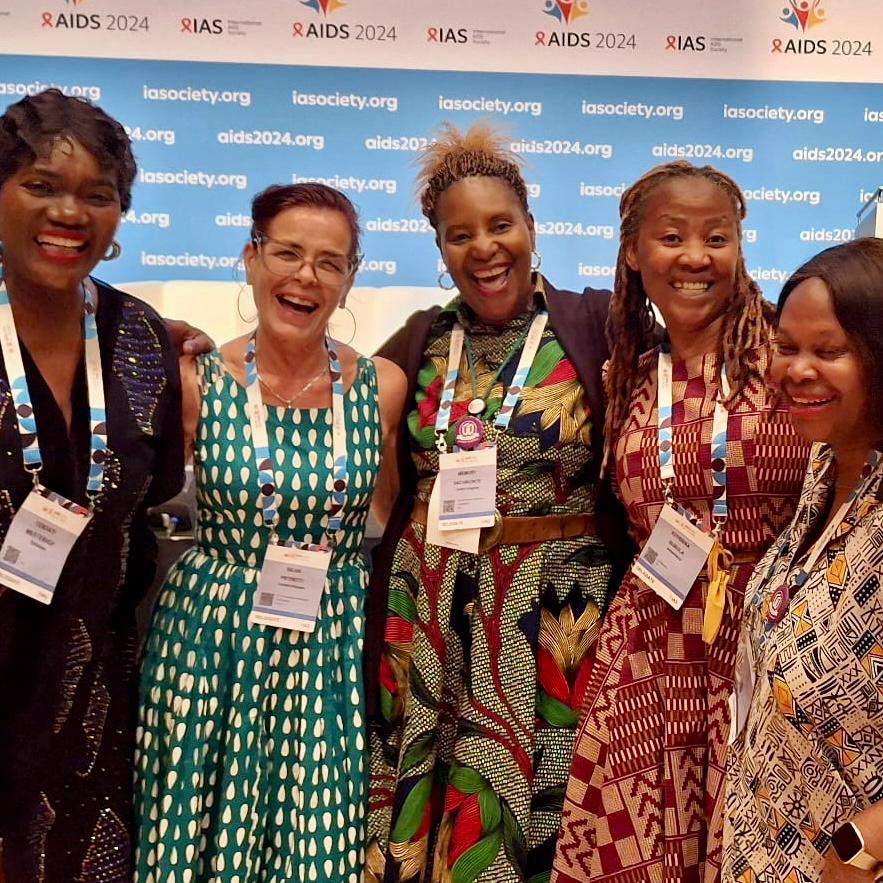
The Women's Team just before our session!
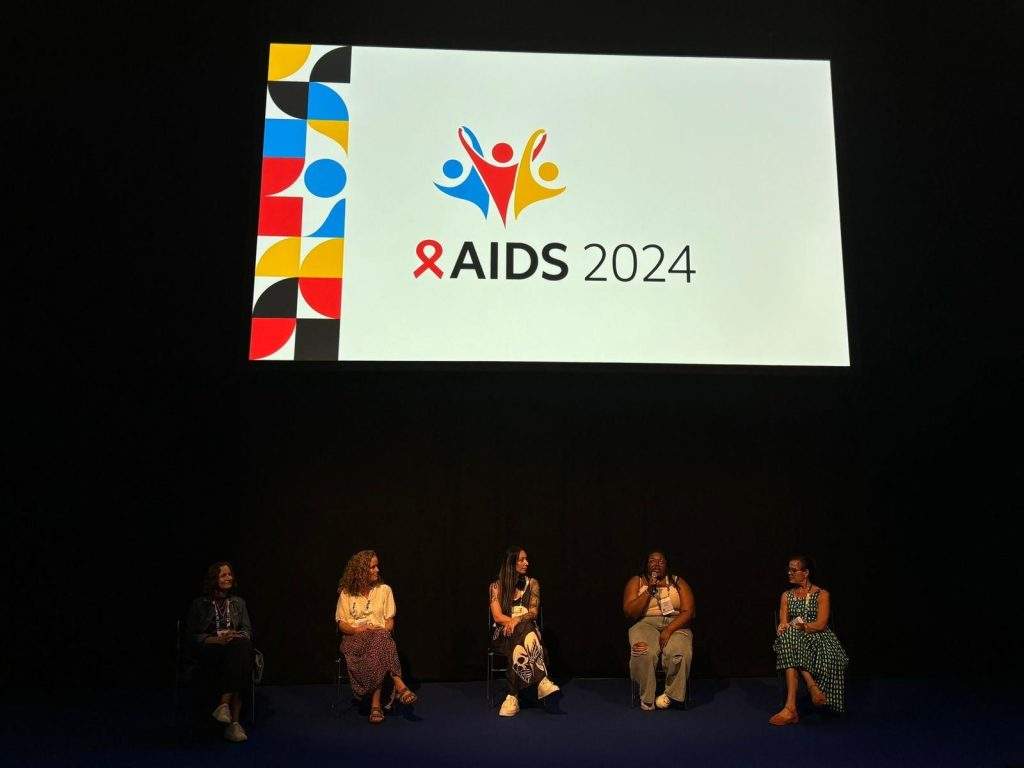
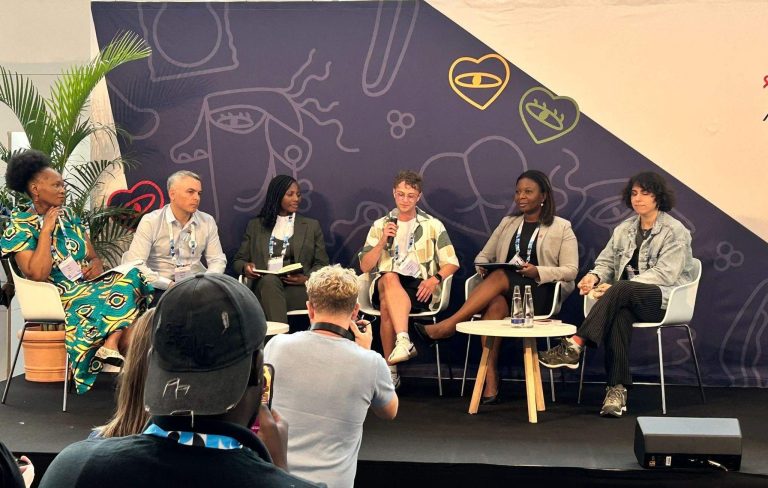
My small contribution to the conference was to share the film we have made on the life of Positively UK’s founder: Sheila’s Story. The screening was followed by a panel discussion with women leaders including our Michelle Bockor, Sophie Strachan, and Anna Zakowich. Michelle and I also lead a session in the Global Village Women Networking Zone, sharing our Rebel By Default project, a creative approach to engaging women in research and activism which we developed in collaboration with the King’s College University Activists in Residence scheme.
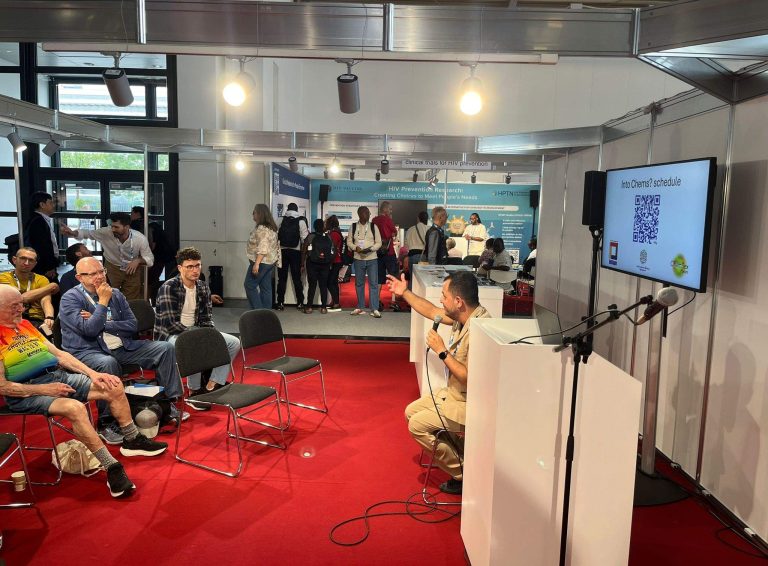
Harun hosting his Chemsex workshop
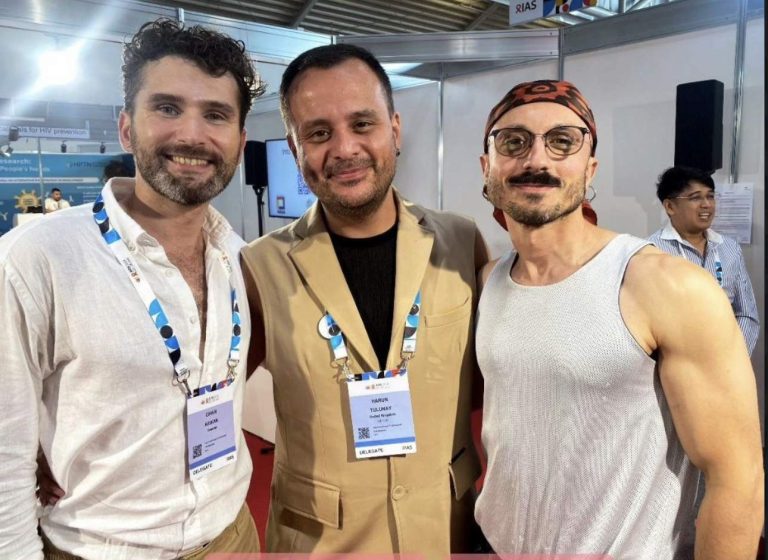
Harun pictured with friends at the IAC
Our Training and Volunteering Manager, Harun Tulunay (above, middle), was especially busy as he had a leadership role in developing the Global Village program and delivering the ChemSex pre-conference, and several sessions in the Global Village Chems Networking Zone. He also co-facilitated a session with Garry Brough and Fast Track City about using Peer Support to address internalized stigma, and a session about the importance of People First Language at Global Village with Laura Waters.
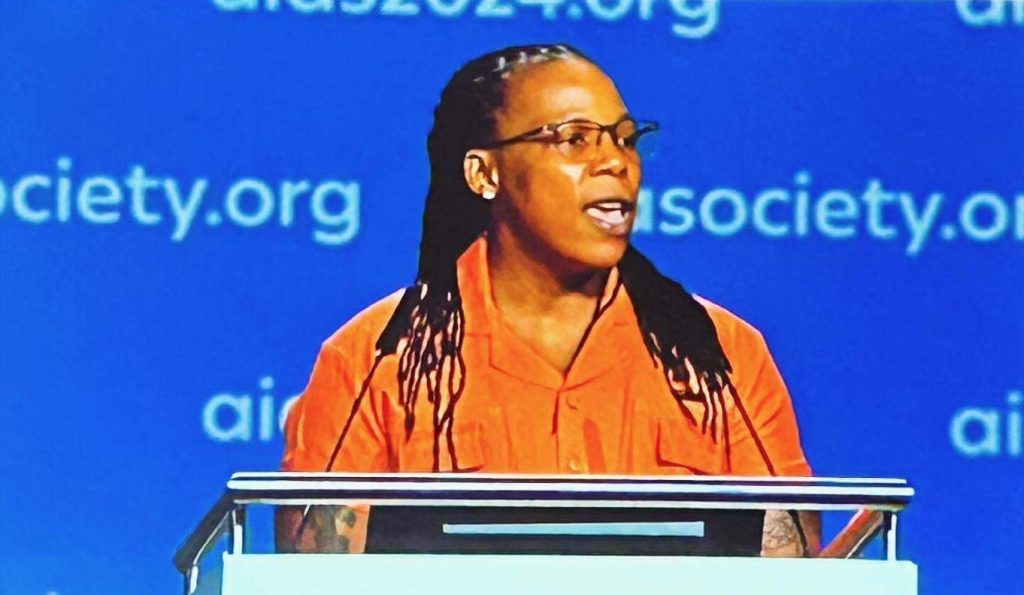
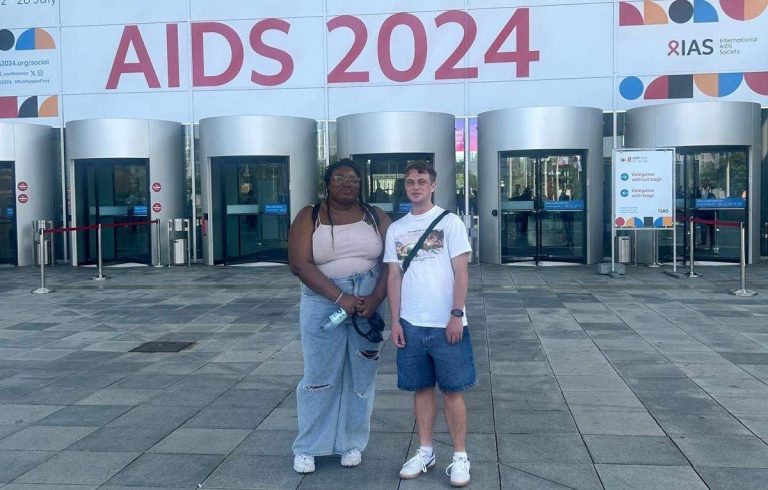
Eli Fitzgerald (below, right) networked like a pro, especially with trans activists who were attending the conference, including the legendary Jay Mulucha, who was the highlight of the opening session as a trans man from Uganda, a country with punitive laws against LGBTQ+ communities. He also chaired a high-level dialogue at the Youth Pavilion with representatives from government, PEPFAR, and the Global Fund.
Eli Fitzgerald Charing a high level meeting at Youth Pavillion
Eli Fitzgerald and Michelle Bockor, both valued members of Positively UK
The International AIDS Conference serves as a powerful reminder of what we can achieve through collaboration and shared commitment. It is a place where groundbreaking research, inspiring activism, and the exchange of ideas converge. It is also a reminder that our job is not done yet and now more than ever we need the political will of our governments and sustained resources, both in the UK and at global level, if we are to reach the goal of ending the epidemic and ensuring quality of life for people with HIV.
Thank you for signing up for the Positively UK Newsletter! We publish our round-up of the latest HIV-related events and news articles straight to your inbox!