

A blog written by Silvia Petretti, our CEO
This year marks 20 years since I made the choice to be public about my HIV status.
At the time, ARVs had only been around for less than a decade, and there was still no sign of the liberating message of U=U — the knowledge that people on effective treatment cannot pass HIV to their sexual partners.
As a woman with HIV, I lived in a world that treated us with fear and judgment. Dating felt like I needed to wear a hazard sign. The stigma was intense, and there were very few other women living openly with HIV in the UK. It was mainly myself, Angelina Namiba, Alice Welbourn, and a few others. We’d end up on the cover of most Positively Women magazines and were regularly invited to speak at conferences and events.
My “coming out” moment was sparked by the unique opportunity to pose for a sculpture by Marc Quinn. It was a cast of my naked body, made of wax mixed with ARVs. The piece was part of an exhibition at the White Cube gallery in Hoxton, alongside other casts of people on lifelong medication. Each sculpture was a blend of wax and the person’s medication — the material was luminous and strange, reminding me of classical Roman marble but softer, more organic, more like skin.
For me, the exhibition said loud and clear: people with HIV are just as human, just as worthy, as anyone else living with a health condition.
At the time, I wrote:
“When I look at the sculpture, I see a woman peacefully asleep, delicate, light and mysterious. I see my body question assumptions of what someone ‘diseased’ should look like. I hope it will be a reminder to a wider audience that people with HIV are just as human, and therefore as complex, as anybody. We are fully entitled to be treated with love and justice, without shame or guilt.”
Read the full blog here
Just this week, on 21st June, we celebrated Zero Stigma Day, and I had the honour of chairing the launch of the Beyond Positive Voices report — a community-led reflection on the 2022 Positive Voices Survey.
The opening panel featured the brilliant facilitators who had run the focus groups — all women with HIV, including Roa, a proud trans woman. They shared what they had heard from other women, migrants, older people, trans and gender-diverse participants. It was such a special moment, witnessing how far we’ve come in centring the voices of women living with HIV. I felt joyously proud.
Living openly with HIV creates ripples. Every time one of us steps into the world free from stigma, we make it easier for someone else to do the same. That’s exactly what happened to me — I saw Angelina and Alice speak, and I thought, If they can do it, maybe I can too. This is the power of peer support. Courage is contagious — much more contagious than HIV.
I have never once regretted being open about my status. Not even for a second. It’s like handing back the shame to society instead of carrying it inside me. I often say stigma will end when people with HIV are visible and heard. I don’t mean that it’s only our job to end stigma — it’s everyone’s — but visibility is a powerful symptom of healing. Not everyone has to sit on a panel or talk to the media. Even just being open with a close friend or family member can be radically empowering ( please do watch NAZ project brilliant video about this here) . Being seen and heard is the foundation of love and acceptance — with HIV, and beyond.
HIV is just a tiny virus. It doesn’t define me or limit me. And yet, I know that many people we support at Positively UK are still carrying fear and shame. The Positive Voices survey showed that 40% of people with HIV still don’t fully trust the message that U=U. That’s staggering.
This is why I continue to say, in every room I enter: I am a woman living with HIV. I say it for the many people still forced to hide. I say it because women are still being diagnosed — and too often, we’re not even offered HIV tests or PrEP, even in sexual health clinics. I say it for those who live at the intersections of racism, poverty, transphobia, poor mental health — who can’t afford to risk rejection or exposure. I say it knowing that for many, saying those words aloud is still dangerous or impossible.
And so I take up space, not just for me, but for all of us. Until we are all seen. Until we are all safe.
To my friends living with HIV:
If you are open, what has helped you along the journey toward visibility?
And if you’re still finding it challenging to share your status, what would need to change for you to feel more confident being open?
To our allies who are not living with HIV:
What is your role in making the world safer and more welcoming for people with HIV?
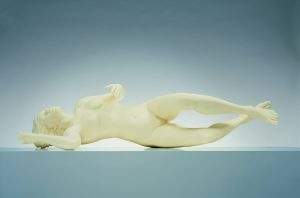
Silvia’s sculpture by Marc Quin. It has been bought by the Wellcome Trust and is now on show at The Wellcome Museum.