On Saturday 1st June, we hosted the Sixth National Conference of People Living with HIV, with over 180 people, all of them living with HIV, in attendance. Under the theme “One Voice, Multiple Experiences,” the conference provided a safe and celebratory space for us to share our journeys and celebrate our diversity.
Read on to experience a day at the conference, through the eyes of our conference attendee, Iain Johnston…
“It was my absolute privilege to attend the sixth National Conference for People Living with HIV in London on Saturday the 1st June 2024.
What a packed and empowering day it turned out to be and one I would recommend that everyone living with HIV should try to attend at some point – shame it is only one day every two years, so here are some of the experiences and take aways from the day…
First of all, just being in a room with 200 people, all of us living with HIV, was a unique experience and one which had a profound impact on me, with a feeling of support, community and acceptance – it was quite awesome, although it was disappointing that there were only ten registrations from Scotland, so hopefully in 2026, we can encourage more Scots to take the opportunity to participate. It was also inspiring to see that attendance was pretty evenly distributed between men and women, almost 50/50!
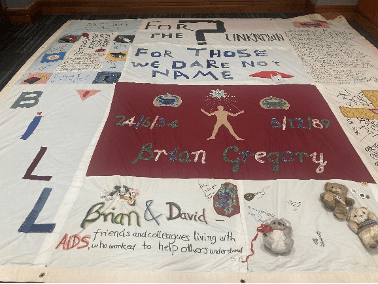
We started the day with an introduction from the uber glamorous CEO of Positively UK (best spectacles I have seen in a long time) and poignantly held a minute’s silence in memory of those lost to HIV/AIDS and to show solidarity with those who still don’t have access to treatment, a sad reality in some parts of the world less fortunate than us here in the UK.
Great to then hear some inspirational stories, experiences and expectations from representatives from different communities including women, straight men, trans, gay and someone born with HIV. Very different journeys but all part of the overall community of people living with HIV.
This was followed by a very informative talk from Tristan Barber, a leading HIV Consultant, around forming a united approach to future HIV Care. His speech basically reinforced what we would all like to see, which is a care pathway starting with people living with HIV and based on their requirements, needs and expectations – sadly in many areas people living with HIV are excluded from the planning of HIV care and are just told what is available in their area, designed by NHS teams without any discussion with those of us living with the virus – A good reminder of “NOTHING ABOUT US, WITHOUT US!”
Leading on nicely to a presentation on the unheard voices project – a collaboration between One Voice Network and NAT, addressing disparities around HIV and broader health/wellbeing outcomes within Black Communities.
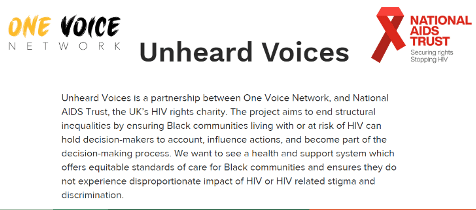
At the moment this is predominantly London centric, but they are looking to involve other areas, so come on Scotland, here is an other opportunity to be heard and be part of a wider study of how services and planned and delivered in different areas of Scotland and within different communities living with and at risk of HIV.
Update on the Positive Voices Survey, shocking to see only one clinic in Scotland participating in the survey meaning that the experiences of those living in Scotland are very underrepresented – compared to the 99 participating clinics in England.
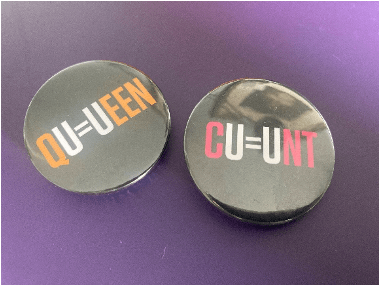
Interestingly, although 97% of respondents knew about U=U, only 65% trust in the statement, despite the clinically proven facts – so still a lot of education to be done to raise awareness around U=U! There is also still a lot of work to be done around Peer Support (more on that later) as 50% of respondents think that the need for peer support in their area is unmet, I would certainly agree with that.

The only problem at the conference, and perhaps why it should maybe be over two Days, is the programme of workshops. I wanted to go to all of these, but sadly the time allowed for only selecting two! So working out what would be most beneficial (not just for me but bringing back to work) I plumped for Peer Support followed by Mental Health.
I had a great experience chatting to Peer Supporters and Peer Navigators from around the country, learning about how they organise and deliver peer support in their areas and being able to share what we offer for peer support through Waverley Care. Encouraging that we all want to see National Standards for Peer Support and a universal approach. It was super encouraging (but also a little disheartening) to see how advanced embedded peer support is in some areas and the huge benefits this is bringing to outcomes surrounding living well with HIV, compared to how far we still have to go in Edinburgh/Scotland. Also where embedded peer support is working well, the peer support is provided by paid peers, which would certainly help in recruitment and retention of peers instead of relying, as we still do in Scotland, on volunteer peers.
I left the session motivated to push on with trying to achieve a universal peer support network in Scotland, with National Standards and endeavour to persuade the NHS to embrace embedded peer support and set up the systems to allow this to happen – so it had the desired motivational impact!
One of the main things I took away from the Mental Health workshop (and something I wasn’t expecting) was the importance of accepting that HIV is NOT like other long term health conditions. We seem to spend a lot of time trying to persuade people that HIV is just a virus, a long term manageable health condition, which in most ways it is. However, HIV is a very stigmatised condition and, try as we might to eradicate stigma through education and normalising HIV, stigma remains widespread and one of the main impacts on the mental health of people living with HIV, a fact that we need to recognise and manage as part of providing ongoing support. Even if HIV is not the main cause of mental health problems, it can act as a microscope, highlighting other underlying mental health issues sort of like “well you have this, this and this to deal with and…oh don’t forget that you have HIV!”
This was a session that made me address my own mental health battles and how I deal with them versus how I SHOULD deal with them, so it was a shock to come face to face with some of my own issues, but hugely beneficial in realising how best to tackle them.
At the end of the day, there was a summary of what each of the workshops had undertaken presented to the conference (so at lease we heard a bit about what we missed to whet our appetites for the next conference!) Followed by an African drumming group who soon had everyone on their feet dancing to the beats (some better than others)!
Looking forward to the 7th conference in 2026 already!”

– Iain Johnston, Volunteer and Peer Support Coordinator, Waverley Care