

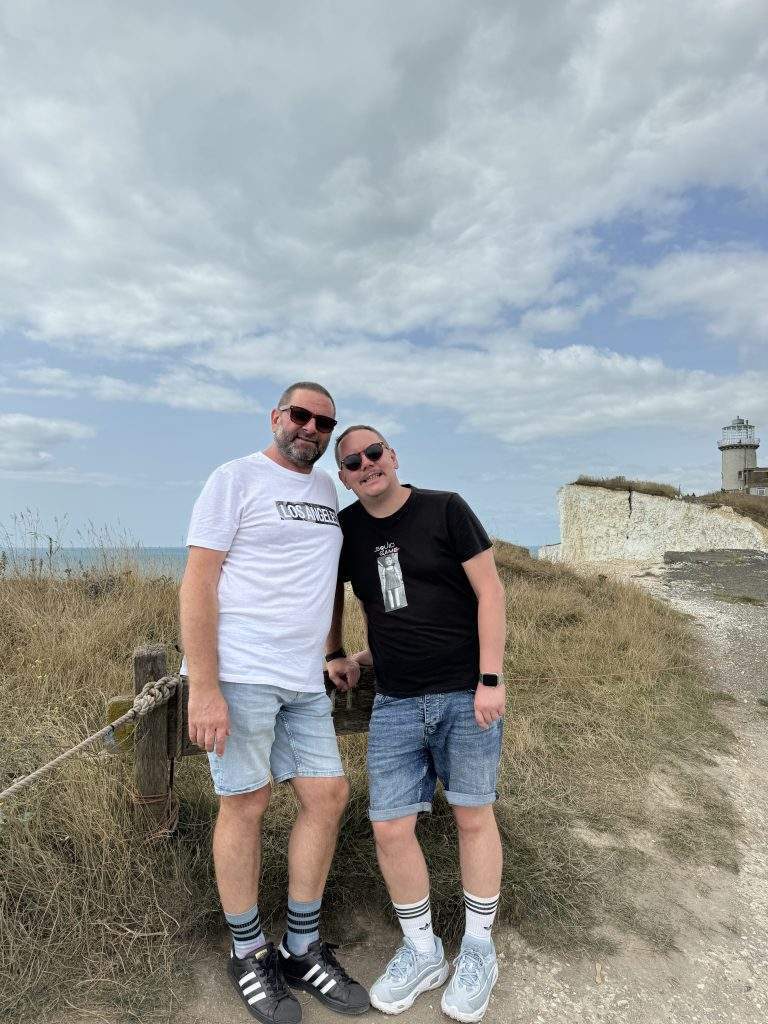
My partner, Robert, isn’t one for the spotlight, but his story needs to be heard. It reminds us why we should test regularly for HIV so that is diagnosed as early as possible.
It all began at our GP surgery in East London, where Robert was sent away with just a regular blood test, which showed nothing significant, so the doctor didn’t order any further investigations. Two months after that initial GP visit and the blood test, Robert was taken straight from the GP practice to A&E, struggling to breathe, a shadow of his former self.
He had difficulty breathing and had lost nearly 30kg and couldn’t stop coughing. He was also behaving quite strangely – he was forgetting facts, telling odd stories, behaving like a child and sometimes he couldn’t even recognise me. It was only later, working in the HIV sector, that I recognised the telltale signs of HIV-associated dementia in his behaviour and memory lapses.
Robert wasn’t diagnosed with HIV during his initial visit to A&E; it wasn’t until about a week later, while he was isolated on the ward, that the diagnosis finally came, and it was a hammer blow. With a severely compromised immune system and a CD4 count of just 29, we knew a tough journey lay ahead. He spent two weeks in a hospital in East London because there were no available beds at the Royal London Hospital. Imagine my heartbreak when, despite being his partner and next of kin, I wasn’t offered a test until a week later!
While staying overnight in the hospital room with Robert, I overheard insensitive comments from the healthcare staff talking about his condition. After a shift change over nobody informed the nurses that I was staying with him for the night, his room was next to their reception, so I heard them saying ‘’I feel so sorry for this young guy that visits that Robert with AIDS, it is his partner, what a poor guy.” It all felt so wrong, so outdated.
But the fight wasn’t over. His condition worsened, leading to more time in hospital, feeding tubes, and a stolen sense of independence. It was the dedicated team at the Royal London Hospital, with their personalised care, nutrition, and rehab, that finally started turning the tide.

At Positively UK, we understand how overwhelming an HIV diagnosis can be, especially when you, and those around you, lack knowledge and face stigma.
Getting diagnosed with HIV can feel like the world’s flipped upside down. It’s easy to feel lost and alone, especially if you don’t know much about the virus. When people lack knowledge to understand HIV, stigma thrives.
Our recently diagnosed workshops are made for people at the beginning of their HIV journey, so they develop skills and confidence to live well with HIV. In our workshops, people like Robert join a safe space to share experiences and connect with others going through the same journey.
With your support, we help people to feel equipped to live a healthy and fulfilling life, just like everyone else.
With your support, we can continue to empower individuals like Robert, helping them transition from feeling lost to living well with HIV.
Please, give the gift of knowledge, support, and hope. Help us rewrite stories like Robert’s, one workshop at a time.
Donate to Positively UK or leave a lasting legacy for people living with HIV.
At Positively UK, we believe in building a future where every person living with HIV can thrive without stigma or discrimination. By leaving a gift in your will, you can help us continue our vital services for generations to come.
Adding a charitable gift to your will is a powerful way to make a lasting impact.
Your legacy gift can:
- Help people living with HIV access the care and support they need
- Reduce HIV-related stigma
- Ensure our community-led services continue to empower individuals with lived experience
By including a donation to Positively UK, you can help ensure we continue our work to support, educate, and advocate for the HIV community.